





The Yamassee Indian Tribe · Yamassee Nation
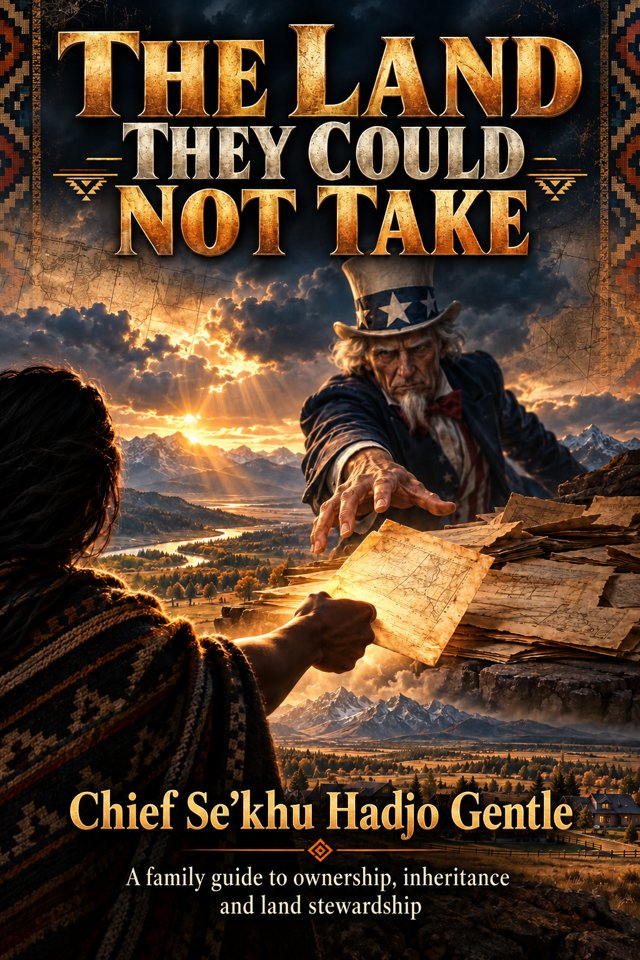
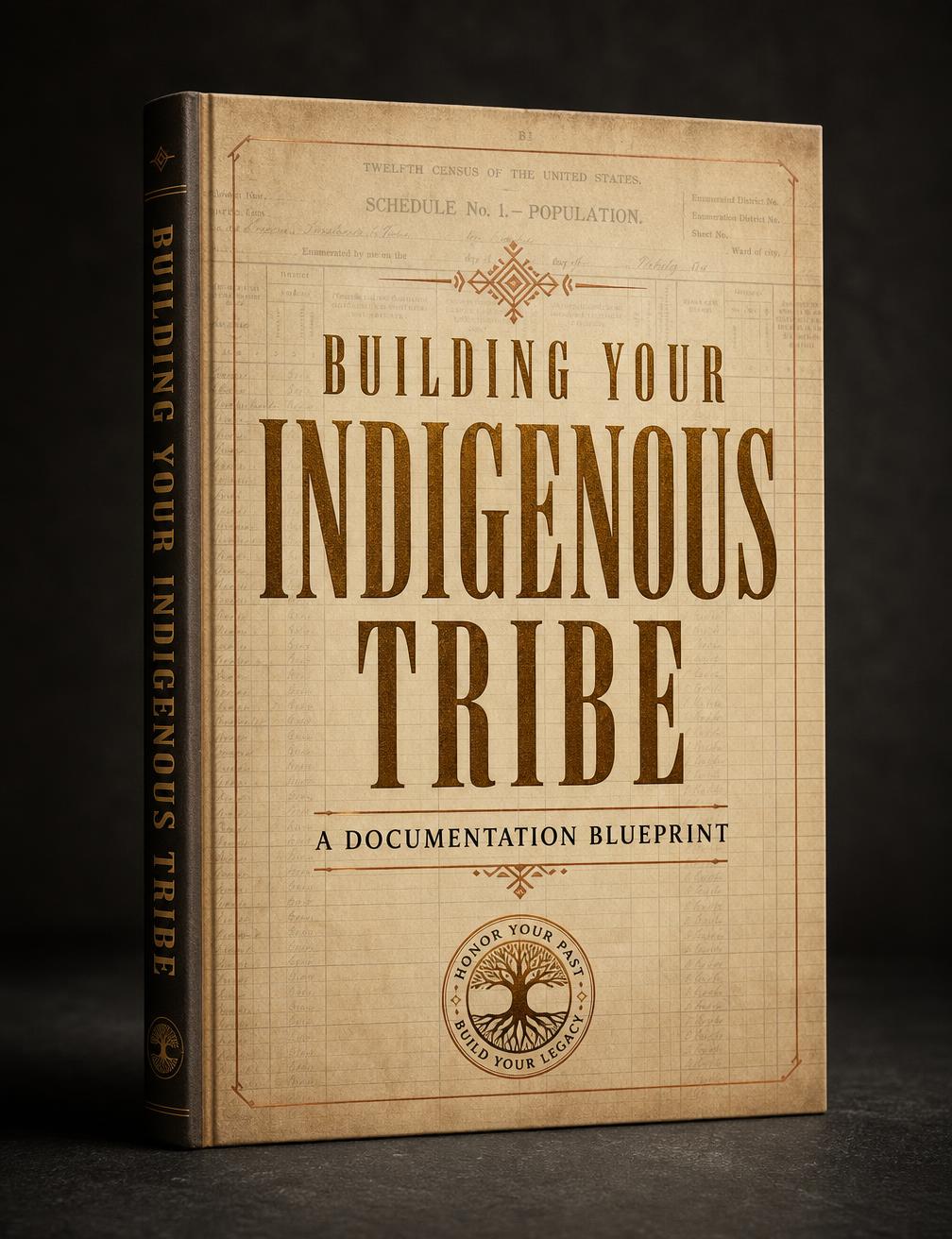
Building YourIndigenous Tribe
$5. Not to buy an identity. To start proving your story.
A documentation blueprint by Chief Se’khu Hadjo Gentle for descendants who are done guessing — census records, vital records, historic rolls, name changes, archives and lawful record correction.
Instant digital download · 100+ page research blueprint
Start where the silence is
Your family story is a lead. Your documents are the evidence.
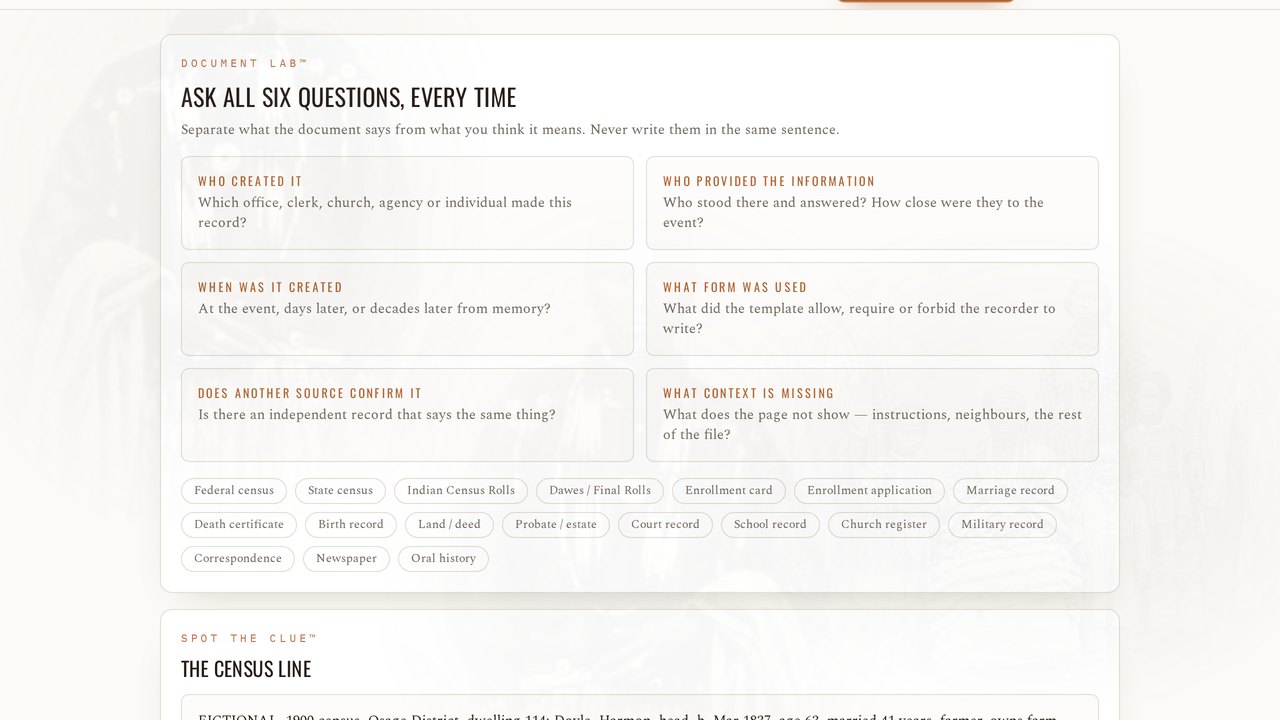
Who was the relative nobody would talk about?
Why did the family surname change between two census years?
Which grandmother was recorded one way on paper and another way at home?
What happened to the land, the church roll, the county register?
What do you actually have — and what have you only been told?
Every one of those questions has a paper trail somewhere. This book teaches you how to find it, read it, and preserve it correctly.
The method
Build a proof stack
A proof stack is a documented, source-cited chain of records that a stranger can follow without taking your word for anything. Stories start the search. Records finish it.

Vital records
Birth, death and marriage certificates — and the amendment process when they are wrong.
Census records
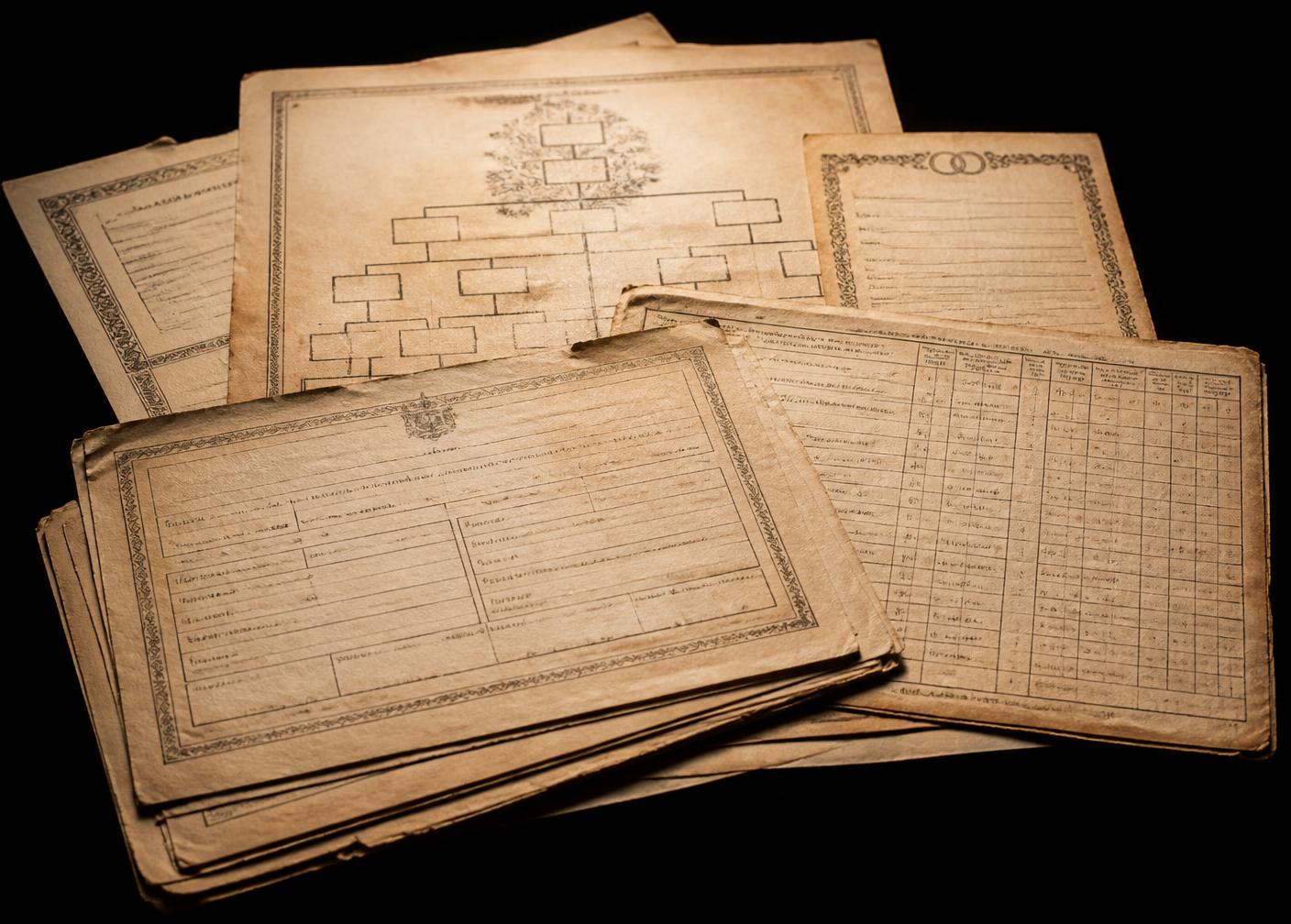
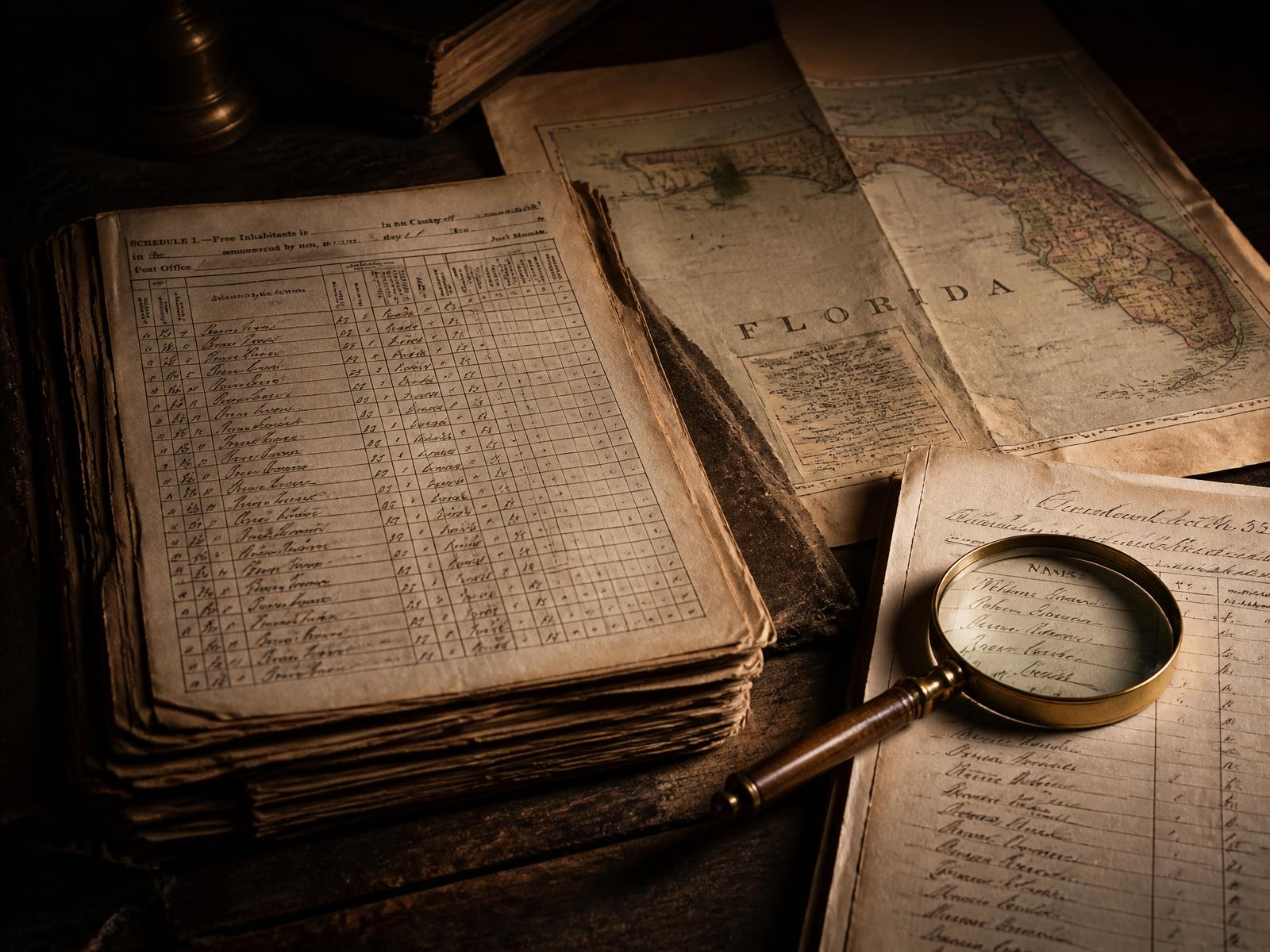
Reading enumeration sheets, racial classification columns, and household patterns across decades.
Historic rolls & registers
Agency rolls, church books, freedmen and community registers, land and probate files.
Name-change trails
Tracking spelling drift, aliases, and administrative reclassification without inventing links.
Archives & repositories
National, state and county archives — how to request, cite and store what you receive.
Lawful record correction
SSA and vital-records processes done properly, through the lawful channels that exist.
Read this before you spit in a tube
A DNA percentage is not a document
Consumer DNA tests compare you to reference panels assembled by private companies. They can suggest relatives and broad regions. They do not produce a name, a date, a county, or a record — and they are not what archives, registrars or communities work from.
Documentation works differently. A census line, a marriage license, a probate file and a church register can be independently pulled by anyone, in the same repository, forever.
What a test gives you
- An estimate that changes when the panel changes
- Matches without context or paperwork
- No county, no year, no source citation
What a record gives you
- A name, a date, a place and an author
- A citation anyone can verify
- A file that outlives the company that sold you a kit
Not a lecture
This isn’t just history — it’s a working blueprint

Inventory what your family already holds
Photos, bibles, deeds, funeral programs, letters — logged and dated before anything else.
Interview the elders, on the record
Structured questions, consent, and a transcript format that becomes citable evidence.
Pull the public record
Census, vital, land, probate, court and church records — with request templates and repository routes.
Reconcile the contradictions
What to do when three documents disagree, and how to note uncertainty honestly.
Correct the record lawfully
Where amendment processes exist, how they actually work, and what they can and cannot do.
Organise for community & governance
Shared archives, stewardship of land and burial sites, and record-keeping a community can rely on.
Inside the book
What you get for $5

- The full documentation blueprint, chapter by chapter
- Record-request templates for archives, registrars and agencies
- A census-reading guide, including racial classification columns
- Name-change and alias tracking worksheets
- The Identity Proof Stack checklist in expanded form
- Evidence-logging and citation formats you can reuse forever
- Community governance and stewardship record-keeping notes
- A scam-avoidance section: paperwork you should never pay for
The five-dollar question
Five dollars used to bethe whole argument.
“Five-dollar Indian” is what people called an identity that was supposedly settled with a payment and a signature — a story about paperwork, money and who got to write the record down.
We are not repeating that. Five dollars here does not buy heritage, citizenship, recognition or legal status. Nobody can sell you those, and anyone who offers to is selling you a problem.
Five dollars now buys the tools to research and document the truth — with your own hands, in your own family’s name.
Plain terms
There is no magic paper
This book does not
- Sell, grant or confer Indigenous identity
- Grant tribal citizenship or enrollment
- Create federal or state recognition
- Provide a legal status, ID or immunity of any kind
- Offer legal advice
This book does
- Teach documentation and archival research
- Show lawful record-correction processes
- Explain how to cite and store evidence
- Warn you off document and identity scams
- Help families organise their own history
If anyone tells you a certificate, card or filing makes you a citizen of a nation, walk away and keep your money. Research is slower. It is also the only thing that holds.
Free · No purchase needed
The Identity Proof Stack Starter Checklist
The first nine documents to gather, where each one lives, and what to write down the moment you get it. Send it to yourself and start tonight.
Who this is for
Descendants doing the work
Families with an oral history and no paperwork to match it
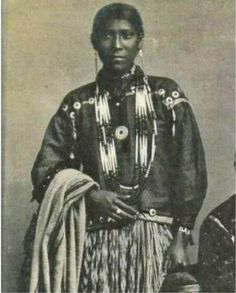
Descendants researching Black Seminole and Southeastern community history
People who found a name change, a reclassification or a missing decade
Community organisers building shared archives and governance records
Anyone who was almost sold a certificate and wants the real process instead
You’ve heard the story.Now find the record.
$5. Not to buy an identity. To start proving your story.
Digital ebook · delivered instantly after payment